Multi-Layer QA Pipeline for Full-Stack Applications
Full-stack project demonstrating a structured, multi-layer testing strategy including unit, integration, BDD, API, performance, frontend, and E2E testing.
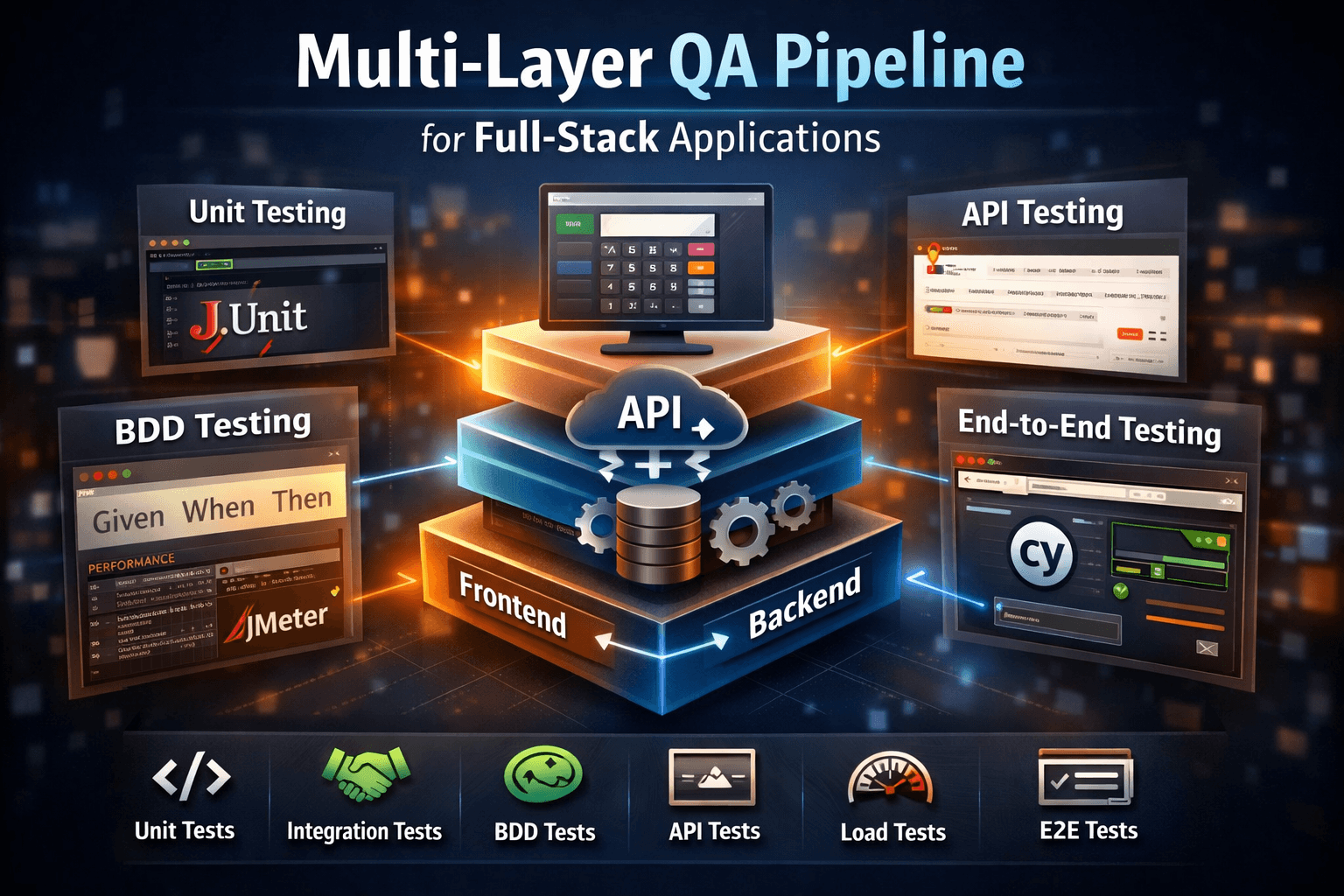
Multi-Layer QA Pipeline for Full-Stack Applications
A full-stack project emphasizing systematic software testing across multiple layers of an application.
The repository integrates backend and frontend development with a strong focus on verification quality, test design, automation, and reproducibility.
The core application is a multi-system computational engine.
The main focus of the project is a comprehensive testing pipeline that includes:
- unit testing
- integration testing
- BDD testing
- API testing
- performance testing
- frontend unit testing
- end-to-end testing
📸 Project Preview
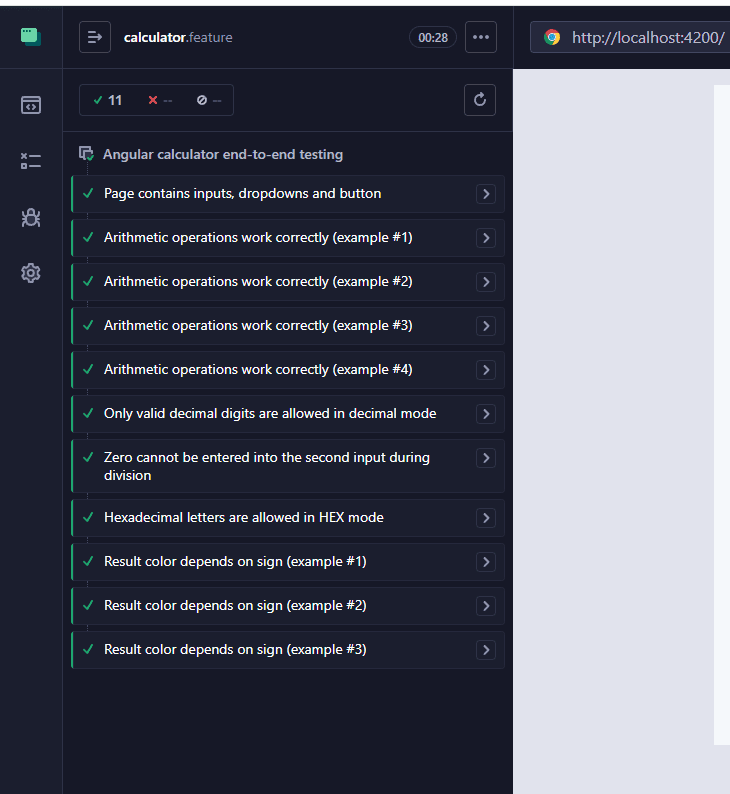
Unit and end-to-end verification of frontend workflows using Cypress interactive mode (cypress:open).
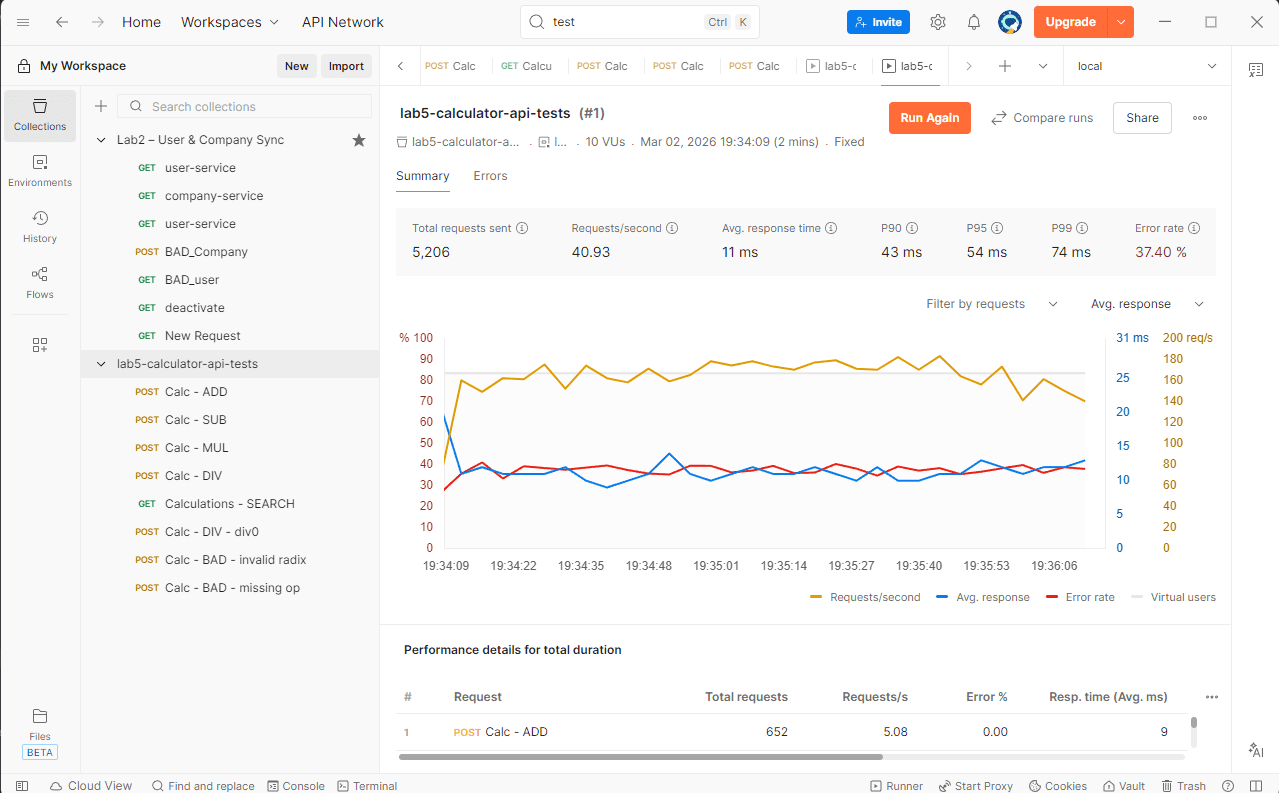
High-volume API load and stress analysis executed in Postman to assess server response stability under concurrent requests.
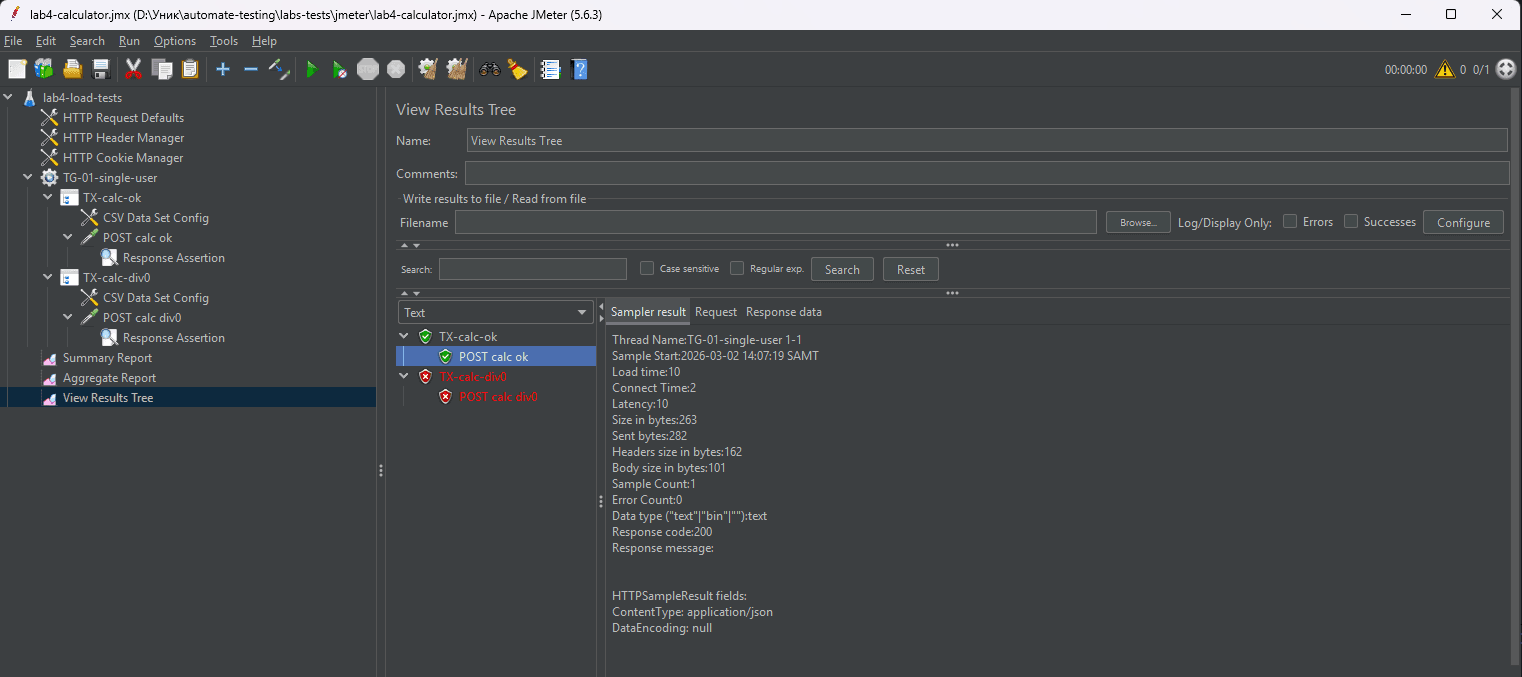
Performance evaluation and protocol behavior testing conducted in JMeter to identify throughput and latency characteristics.
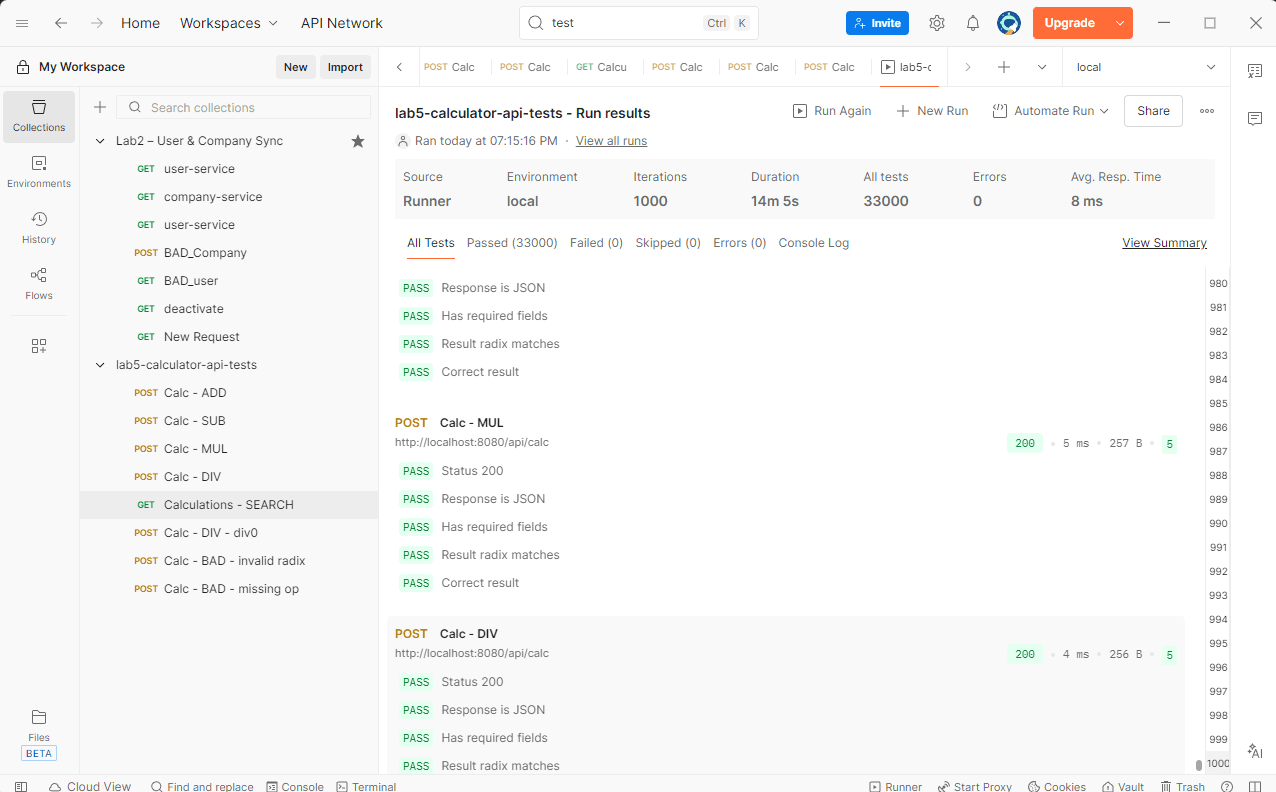
Comprehensive execution of Postman collections to verify correctness and reproducibility of all backend API endpoints across multiple environments.
🚀 Quick Links
- 💻 GitHub Repository - Explore source code
📋 Table of Contents
- 🏗️ Architecture Overview
- 🎯 Project Focus
- 🧩 Technology Stack
- ⚙️ Functional Domain
- 🧪 Testing Architecture
- 📊 QA Strategy
- 📚 Educational Outcomes
🏗️ Architecture Overview
The project is organized as a multi-layer system combining backend and frontend applications with an integrated testing infrastructure.
textautomate-testing/ │ ├── back/ → Spring Boot backend + testing layers ├── client/ → Angular frontend + Cypress tests └── QA layers → Postman, JMeter, Cucumber, Testcontainers
The repository is structured to reflect real-world QA workflows where different testing tools operate across different layers of the system.
🎯 Project Focus
This project demonstrates a structured approach to software quality assurance across multiple domains:
- backend unit testing
- backend integration testing with real database
- behavior-driven testing (BDD)
- API testing
- performance and load testing
- frontend unit testing
- end-to-end testing
The emphasis is not on the business logic itself, but on how thoroughly and correctly the system is verified.
🧩 Technology Stack
Backend
- Java 17
- Spring Boot
- Spring Data JPA
- PostgreSQL
- Flyway
- Testcontainers
- JUnit 5
- Cucumber
Frontend
- Angular
- TypeScript
- Jasmine
- Karma
- Cypress
API and Performance Testing
- Postman
- JMeter
⚙️ Functional Domain
The system implements arithmetic operations:
- addition
- subtraction
- multiplication
- division
Supported numeral systems:
- binary
- octal
- decimal
- hexadecimal
The backend provides REST endpoints for:
- calculation execution
- history persistence
- filtered retrieval of results
The frontend provides a calculator interface interacting with the backend.
🧪 Testing Architecture
The project is built as a sequence of stages, each adding a new testing layer.
1. Backend Unit Testing
Focus:
- isolated validation of business logic
- correctness of operations
- exception handling
Techniques:
- parameterized tests
- CSV datasets
- dynamic tests
- nested test classes
2. Integration Testing
Focus:
- interaction between application layers
- database validation
- real environment simulation
Practices:
- Testcontainers
- PostgreSQL
- Flyway migrations
- JSON fixtures
3. BDD Testing (Cucumber)
Focus:
- business-readable scenarios
- executable specifications
Features:
- Gherkin syntax
- step definitions
- scenario tables
- reusable setup
4. API Testing (Postman)
Focus:
- independent API validation
- request reproducibility
Features:
- collections
- environments
- automated assertions
5. Performance Testing (JMeter)
Focus:
- system stability under load
- response behavior
Metrics:
- throughput
- latency
- concurrency behavior
6. Frontend Unit Testing (Angular)
Focus:
- UI logic validation
- component isolation
Covered:
- components
- directives
- pipes
- validation logic
7. End-to-End Testing (Cypress)
Focus:
- real user interaction
- full application flow
Features:
- browser automation
- Page Object pattern
- scenario-based testing
Execution:
bashnpm run cypress:open
📊 QA Strategy
The project follows a layered QA approach:
- unit tests → validate logic
- integration tests → validate system interaction
- BDD → validate behavior
- API tests → validate contracts
- load tests → validate stability
- frontend tests → validate UI logic
- E2E tests → validate user flows
This reduces blind spots and increases system reliability.
📚 Educational Outcomes
The project demonstrates:
- structured QA pipeline design
- combination of testing strategies
- container-based testing environments
- reproducible test execution
- separation of concerns in testing
- full-stack validation approach